

The 50% Leverage Trap: Forklift Extensions, Attachments & Data Plate Violations Middle Tennessee Facilities Miss (29 CFR 1910.178(a)(4))
When Reaching Further Cuts Your Lifting Capacity in Half
In manufacturing facilities, structural steel yards, appliance distribution centers, and freight cross-docks across Nashville, Murfreesboro, Smyrna, Lebanon, and Mt. Juliet, material handlers frequently encounter oversized, deep, or irregular cargo. To reach across a flatbed trailer or handle extra-deep crates, operators routinely grab a pair of slip-on fork extensions, clamp on a drum grabber, or loop a nylon sling directly around a bare fork tine.
While those quick adaptations speed up loading, they fundamentally alter the physics of the lift truck. A forklift operates on a strict counterbalance fulcrum principle: the front drive axle acts as the pivot point between the heavy rear counterweight and the load out front.
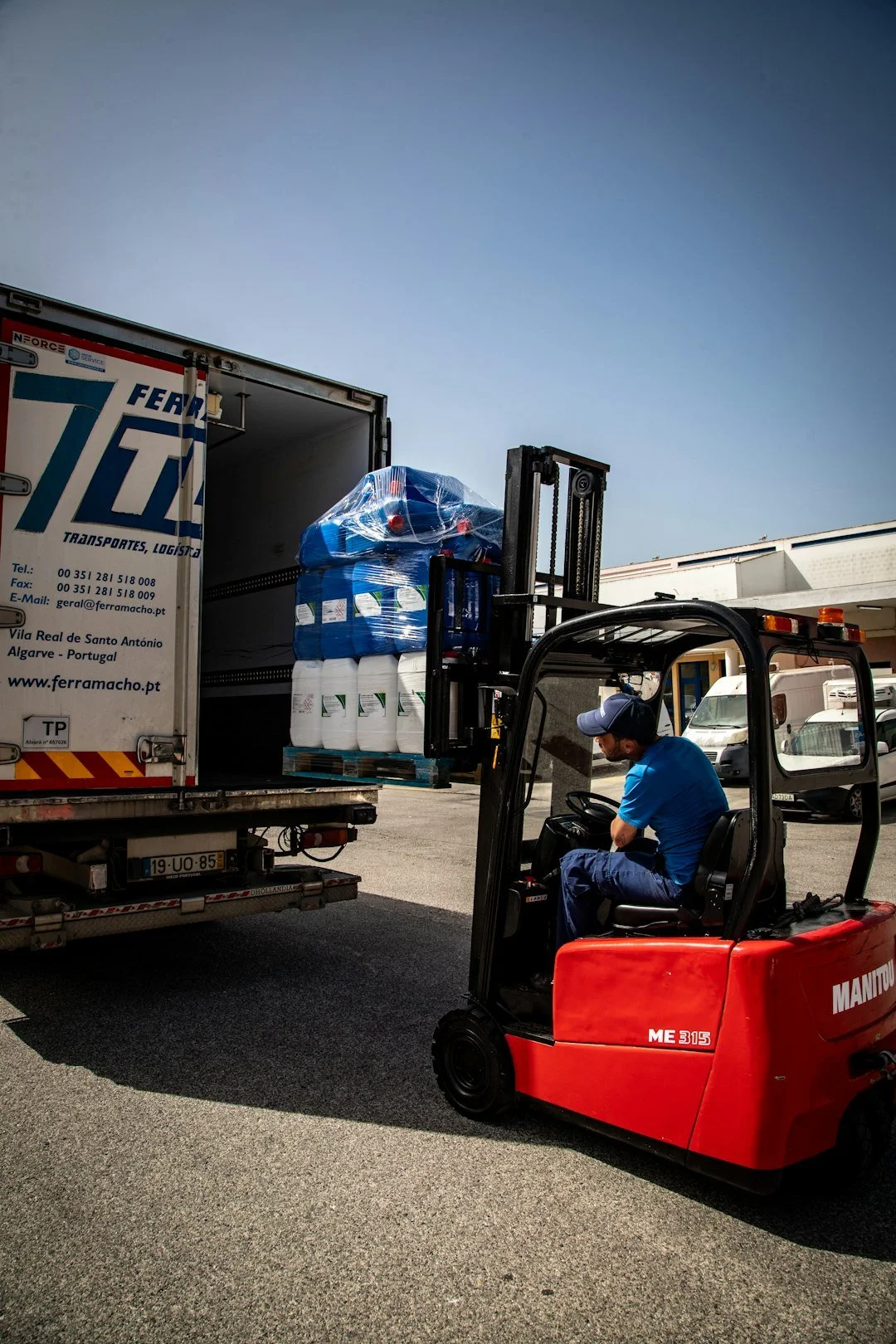
Every single inch you push a load forward—or every pound of steel attachment you hang on the mast carriage—erodes your truck's stability margin. Enforced across the state by TOSHA under OSHA 29 CFR 1910.178(a)(4) and 1910.178(a)(5), operating a powered industrial truck with unapproved front-end attachments or an outdated capacity data plate triggers immediate citations and invites catastrophic forward tip-overs.
The Load-Moment Physics: Why a 5,000-lb Truck Drops to 2,500 lbs
Most industrial forklifts are rated at a standard 24-inch load center—meaning the center of gravity of a uniform 48-inch pallet sits 24 inches forward of the vertical fork face. When operators slide on 72-inch or 84-inch fork extensions to handle a deeper load, the actual load center moves outward, drastically multiplying leverage against the rear counterweight:
Actual Capacity = (Rated Load Center ÷ Actual Load Center) × Rated Capacity
- Baseline Rating: A standard 5,000-lb forklift at a 24-inch load center generates a maximum safe lifting moment of 120,000 inch-pounds (5,000 lbs × 24 in).
- With a 36-Inch Load Center: Shifting the load center out just 12 inches drops effective capacity to 3,333 lbs (120,000 ÷ 36 in).
- With a 48-Inch Load Center (Full Extension Use): Pushing the load center to 48 inches cuts lifting capacity squarely in half to 2,500 lbs—before even subtracting the dead weight of the steel fork extensions themselves.
- The 150% Extension Length Limit (ANSI/ITSDF B56.1): Industry safety standards strictly prohibit using fork extensions longer than 150% of the supporting parent fork length. A 48-inch base fork can legally support a maximum 72-inch extension; sliding an 84-inch or 96-inch extension onto 48-inch forks creates excessive bending stress and violates manufacturer tolerances.
OSHA Forklift Attachment & Modification Compliance Matrix
| Attachment / Practice | OSHA Standard Mandate | Mandatory Compliance Workflow |
|---|---|---|
| Slip-On Fork Extensions | 29 CFR 1910.178(a)(4) & (a)(5) | Prior written manufacturer approval, updated truck data plate, stamped capacity on extensions, and locked heel pins. |
| Hydraulic Clamps, Rotators & Side-Shifters | 29 CFR 1910.178(a)(5) & (o)(4) | Truck nameplate must identify the attachment and list revised net capacity at maximum elevation. Treat unloaded truck as partially loaded. |
| "Free-Rigging" Slings on Bare Forks | OSHA Standard Interpretation (1910.178(a)(4)) | Prohibited without prior written truck manufacturer or Registered PE approval. Slings can slide off tapered blades or overload single tines. |
| Operator Retraining | Under 29 CFR 1910.178(l)(3)(i)(G) & (l)(4), operators must receive formal training and hands-on evaluation on the specific attachment's operating limitations before use. | |
3 Attachment & Rigging Traps That Fail TOSHA Inspections
1. Ordering Aftermarket Extensions Without Updating the Data Plate
Purchasing a pair of steel fork extensions from an industrial supply catalog and throwing them on a forklift violates federal law if you skip the paperwork. Under 29 CFR 1910.178(a)(4), modifications and additions affecting capacity and safe operation cannot be performed without the truck manufacturer's prior written approval (or written engineering approval from a Registered Professional Engineer if the manufacturer fails to respond), and the truck's capacity plate must be updated accordingly.
2. "Free-Rigging" Motors & Dies Directly From Bare Forks
In maintenance shops and fabrication bays, workers regularly drape a chain sling or polyester web strap over a single fork blade to hoist a gearbox or steel plate. OSHA explicitly defines this practice as "free-rigging" and classifies it as an unauthorized modification. Slings can slip toward the tapered tip of the fork, sharp fork edges slice synthetic webbing under tension, and swinging loads pull the truck laterally outside its stability triangle. Below-the-forks lifting requires an approved, engineered lifting beam or hook attachment secured to the carriage or both forks.
3. Unpinned Extensions & Shop-Welded "Homemade" Attachments
Operating fork extensions without locking retention pins behind the fork heel allows the steel sleeves to slide off the tines when tilting forward to deposit a load. Even worse, maintenance shops occasionally weld custom lifting eyes onto fork tips or fabricate homemade jib booms. Uncertified shop welds alter fork metallurgy and carry severe willful citation exposure.
Keep Your Fleet Data Plates & Attachment Training Audit-Ready
Every front-end attachment—from simple slip-on fork extensions to hydraulic paper roll clamps and engineered lifting beams—changes how a forklift balances, steers, and stops. Verifying manufacturer approvals, auditing data plates, and training operators on revised load-center physics protects your team from forward tip-overs and keeps your operation fully compliant.
At Southeast Safety Partners, we deliver practical, instructor-led Forklift Operator Certification, Attachment-Specific Refresher Evaluations, and Qualified Rigger & Material Handling Audits directly to your facility across Nashville, Murfreesboro, Smyrna, Franklin, and Lebanon.
Using fork extensions, clamps, or lifting attachments in your facility?
👉 Visit our website or call Southeast Safety Partners today to schedule on-site Forklift Operator Training and fleet data plate audits across Middle Tennessee.
