

The "cheap Public CPR Class" Is Costing Your Facility Double. Here’s the Math.
On-Site vs. Off-Site CPR Training: The Hidden Costs Costing Middle Tennessee Employers Thousands
The True Cost of a "cheap off-site CPR class"
Every two years, safety coordinators, plant managers, and HR directors across Nashville, Murfreesboro, Smyrna, and Franklin face the same logistical puzzle: renewing employee CPR, AED, and First Aid certifications to maintain compliance with OSHA 29 CFR 1910.151 and TOSHA standards.
At first glance, registering 10 to 20 workers for public, off-site weekend or evening classes appears budget-friendly. However, invoice cost accounts for only a fraction of the total expense. When factoring in travel time, vehicle mileage, overtime wages, and lost production capacity, sending workers off-site consistently inflates safety budgets.
4 Hidden Expenses of Off-Site Certification
1. Commute & Middle Tennessee Traffic Delays
Sending personnel across congested corridors—whether navigating I-24 through Rutherford County, I-65 through Brentwood, or Briley Parkway—adds 1 to 2 hours of round-trip drive time per employee. Under standard labor policies, employers are responsible for paying regular hourly wages plus IRS standard mileage during required company travel.
2. Overtime & Shift Disruption
Public training providers operate on rigid calendar schedules, forcing second- or third-shift technicians to attend morning classes on their personal rest days. This triggers mandatory overtime pay, creates severe fatigue, and leaves maintenance benches understaffed.
3. Administrative Tracking & Staggered Expirations
Booking employees piecemeal across multiple public dates results in fragmented records. Safety leads find themselves tracking dozens of separate renewal dates rather than maintaining unified, audit-ready group compliance.
4. Generic Scenarios vs. Facility-Specific Preparedness
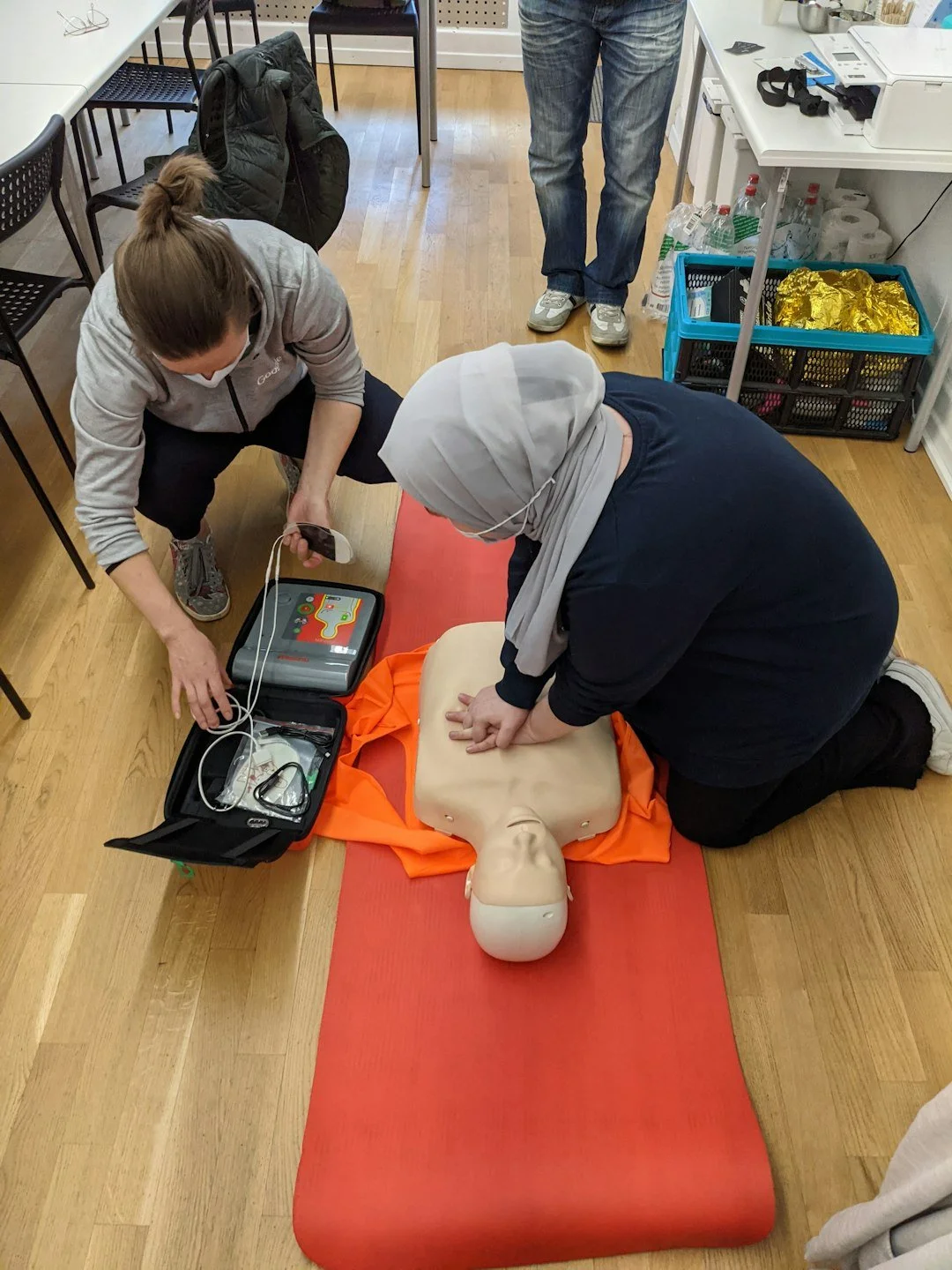
Public classes focus on generic home scenarios. In contrast, on-site training incorporates the facility's actual floor layout, specific AED locations, dock door hazards, and high-voltage machinery zones.
Cost Comparison: Off-Site Public Class vs. Mobile On-Site Group Training
Based on certifying a group of 10 lead operators / supervisors ($28/hr base wage):
| Expense Category | Off-Site Public Classes (10 Staff) | Mobile On-Site Group Training (10 Staff) |
|---|---|---|
| Course Registration Fees | ~$750 ($75/seat) | Flat group rate (typically lower per student) |
| Wages Paid During Commute | ~$420 (1.5 hrs drive time × 10 workers) | $0 (Zero travel time) |
| Mileage Reimbursements | ~$200 (Avg. 30-mile round trip) | $0 |
| Lost Production & Overtime | High (Staggered absence coverage) | Minimized (Completed on shift transition) |
| Estimated Real Total | ~$1,370+ | ~$700–$850 (Net savings: 35–45%) |
Strategic Advantages of Bringing the Classroom to Your Site
- Single Date Certification: Entire shifts achieve recertification together, simplifying tracking for TOSHA recordkeeping.
- Hands-On AED Integration: Trainees practice using trainer AED units directly adjacent to the actual emergency stations mounted in your plant.
- Shift Alignment: Sessions can be scheduled between shifts or at early morning hours, eliminating fatigue and overtime spikes.
Streamline Safety Compliance in Middle Tennessee
Safety training should protect workers without draining operational budgets. Transitioning from fragmented off-site public classes to customized on-site group instruction delivers higher engagement, hands-on muscle memory, and measurable financial savings.
Whether operating a distribution hub in Lebanon, a fabrication plant in Murfreesboro or Smyrna, or a commercial office in Nashville, mobile instruction brings certified excellence directly to your conference room or shop floor.
Calculate your group savings today.
👉 Reach out by email or call our team today to request a customized quote for on-site workplace CPR, AED, and First Aid certification across Middle Tennessee.
