

Beyond Adhesive Bandages: Why Standard First Aid Boxes Fail Industrial Severe Bleeding Emergencies (29 CFR 1910.151 & ANSI Z308.1 Class B)
Beyond Adhesive Bandages: Why Standard First Aid Boxes Fail Industrial Severe Bleeding Emergencies (29 CFR 1910.151 & ANSI Z308.1 Class B)
The 3-Minute Bleeding Window vs. The 8-Minute EMS Reality
When severe trauma occurs on an industrial floor—whether an operator suffers a deep laceration from sheared metal, a puncture from an unshielded banding strap, or a crushing machine entanglement—time is the ultimate adversary. A ruptured femoral or brachial artery can cause an individual to lose consciousness in under 60 seconds and bleed to death in as little as 3 to 5 minutes.
Even in prime logistics and manufacturing zones throughout Nashville, Murfreesboro, Smyrna, Lebanon, and Mt. Juliet, the average emergency medical response time frequently exceeds 7 to 10 minutes from the initial 911 dispatch. In an arterial bleed, the coworker standing right next to the victim is the true first responder.
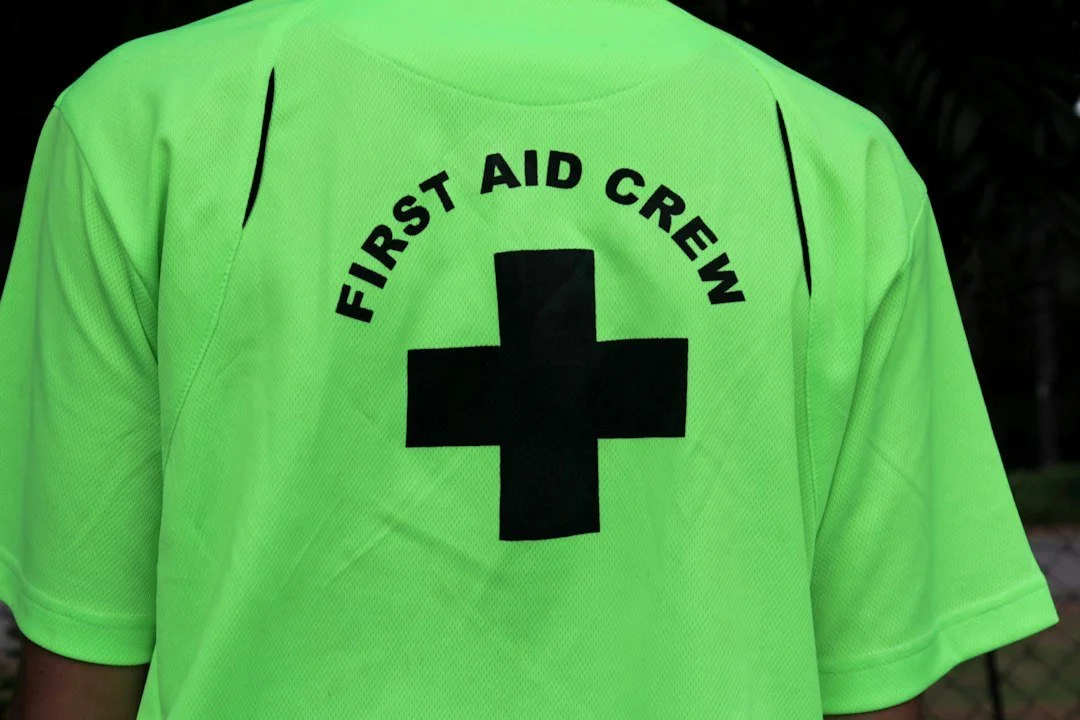
Yet when coworkers rush to the wall-mounted first aid box, they often find only burn cream, headache tablets, and small adhesive bandages. Under OSHA 29 CFR 1910.151 and consensus standard ANSI/ISEA Z308.1-2021 (enforced across the state by TOSHA), relying on basic retail first aid kits in high-risk industrial environments creates catastrophic life-safety exposure.
ANSI/ISEA Z308.1-2021: Class A vs. Class B Workplace Kits
The ANSI/ISEA Z308.1 standard establishes two distinct classes of first aid kits based on workplace hazard density:
- Class A Kits (Low-Risk Environments): Designed for common, low-hazard workplaces such as corporate offices, light retail, and small administration spaces where minor cuts, scrapes, and light burns are the primary risks.
- Class B Kits (Industrial & High-Risk Environments): Mandatory for broader, high-risk work environments including manufacturing facilities, fabrication shops, distribution hubs, woodworking plants, and construction sites. Class B kits mandate significantly broader quantities of supplies and require dedicated trauma dressings, windlass tourniquets, and splints to handle high-velocity penetrations and traumatic hemorrhages.
The Bleeding Control Revision: The updated ANSI standard explicitly requires windlass or ratcheting tourniquets and dedicated bleeding control dressings in facilities where powered equipment, sharp materials, or heavy material handling are present.
First Aid Capability Matrix: Retail Box vs. Industrial Trauma Station
| Feature & Scenario | Standard Office / Retail Box (Class A) | Industrial Trauma / Bleeding Station (Class B) |
|---|---|---|
| Arterial Bleed Control | Incapable (Small gauze pads saturate in seconds) | Windlass tourniquets + heavy sterile pressure dressings |
| Large Surface Lacerations | 2–3 small roller bandages | Large 5" × 9" trauma pads, pressure dressings, trauma shears |
| Fracture & Dislocation | Triangular bandage only | Padded malleable splints (SAM splints) + self-adherent wrap |
| OSHA 1910.151 Compliance | Kits must reflect specific site hazard assessments; generic kits in metal or woodworking plants fail TOSHA adequacy audits. | |
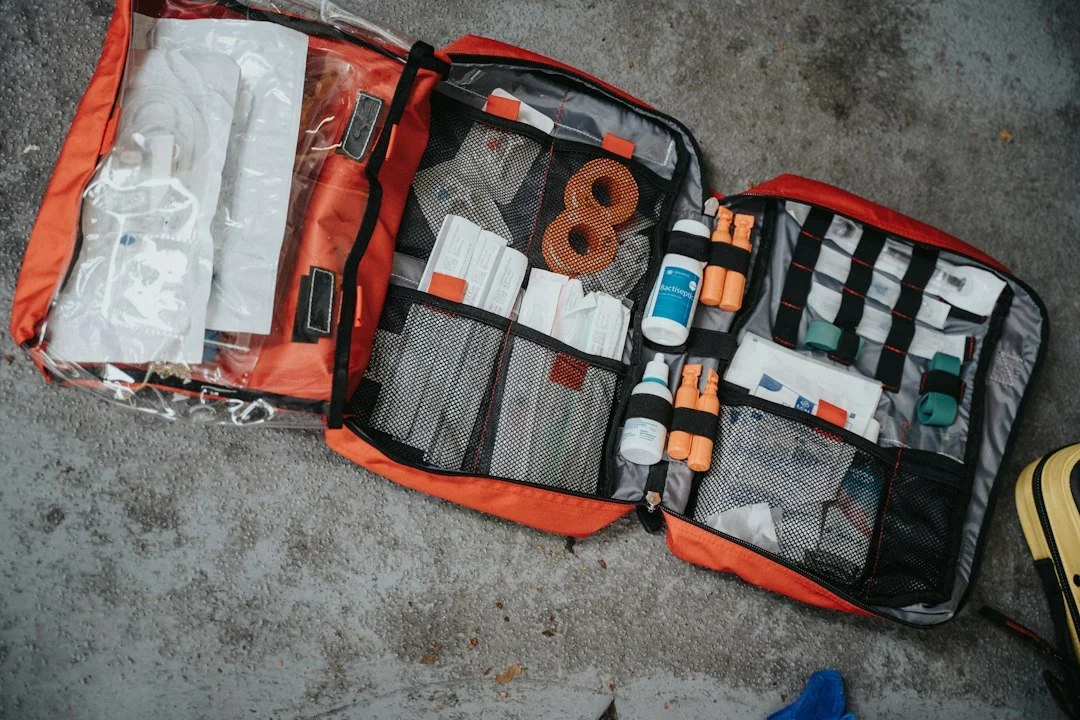
3 Pillars of Practical Severe Bleeding Response in AHA First Aid
The American Heart Association (AHA) Heartsaver First Aid curriculum provides high-level, evidence-based instruction designed specifically for practical workplace trauma response. Key life-saving interventions include:
1. Proper Tourniquet Application (High & Tight vs. 2–3 Inches Above)
In an urgent, chaotic emergency where the exact wound cannot be seen through clothing, apply the tourniquet high and tight on the injured extremity. If the wound is clearly exposed, place it 2 to 3 inches above the bleeding site (never directly over a joint). Tighten the windlass rod until bright red arterial bleeding stops and the distal pulse disappears, then lock the rod and note the application time.
2. Wound Packing in Junctional Areas (Groin & Armpits)
Tourniquets cannot be applied to junctional anatomy where limbs meet the torso. For deep junctional wounds, responders must firmly pack sterile gauze directly into the wound cavity until it is packed tight to the bone, then apply continuous direct two-handed pressure for at least 3 minutes to promote clot formation.
3. Eliminating Tourniquet Phobia Through Muscle Memory
Outdated training taught workers that applying a tourniquet automatically results in limb amputation. Modern trauma medicine and emergency protocols prove this myth false: a commercially manufactured windlass tourniquet can remain safely applied for up to two hours without permanent tissue damage. The true risk is hesitating while catastrophic blood loss induces irreversible cardiac arrest.
Equip Your Team with Life-Saving Trauma Skills
Mounting an ANSI Class B kit on the column is only half the battle. If workers do not possess the tactile muscle memory to rapidly stage, apply, and lock a windlass tourniquet under stress, expensive medical gear goes unused when seconds matter most.
Bringing comprehensive, practical AHA Heartsaver CPR, AED & First Aid Training directly to your floor equips material handlers, maintenance leads, and shift supervisors to act decisively during major traumatic injuries, severe lacerations, and cardiovascular emergencies.
Ensure your facility is prepared for severe trauma.
👉 Visit our website or call our team today to schedule certified on-site American Heart Association First Aid, CPR, and AED training for your Middle Tennessee workforce.
