The Scissor Lift Harness Myth: ANSI A92 Safe Use Plans & Aerial Lift Traps Middle Tennessee Contractors Miss (OSHA 1926.453 / ANSI A92.22)
When Elevated Equipment Becomes a Catapult
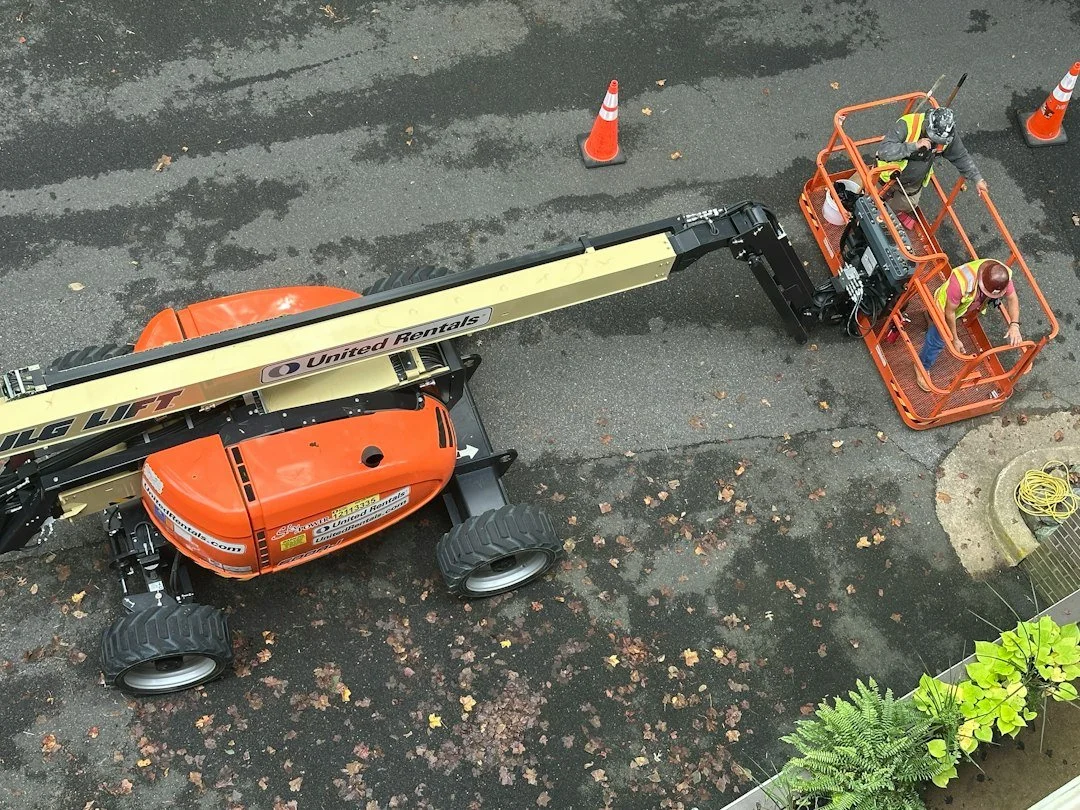
Across commercial developments, electrical retrofits, steel fabrication facilities, and distribution hubs throughout Nashville, Murfreesboro, Smyrna, Franklin, and Lebanon, Mobile Elevating Work Platforms (MEWPs) are indispensable. Telescopic booms, articulating knuckle booms, and rough-terrain scissor lifts operate daily at elevations ranging from 19 to over 85 feet.
Yet MEWP safety remains one of the most misunderstood areas of jobsite compliance. Field superintendents frequently enforce the wrong fall protection equipment for the machine type, skip required ground-level rescue rehearsals, or fail to produce a site-specific ANSI A92.22 Safe Use Plan during safety audits.
Under OSHA 29 CFR 1926.453 (Aerial Lifts), 29 CFR 1910.67 (General Industry), and current ANSI/SAIA A92 suite standards enforced statewide by TOSHA, operating an aerial platform without documented risk assessments and certified operator training triggers immediate serious citations.
The Harness Debate: Boom Lifts vs. Scissor Lifts
One of the most persistent questions on industrial jobsites is whether harnesses are required on scissor lifts. The standards differentiate between machine types based on physical kinematics:
- Boom-Supported Lifts (OSHA 1926.453(b)(2)(v)): Full-body harnesses and fall restraint or personal fall arrest systems are federally mandatory on all boom lifts. When a boom lift’s wheels hit a pothole or curb, the base movement is magnified exponentially along the boom arm—creating a violent "catapult effect" that can launch an unattached worker out of the basket even if the guardrail is intact.
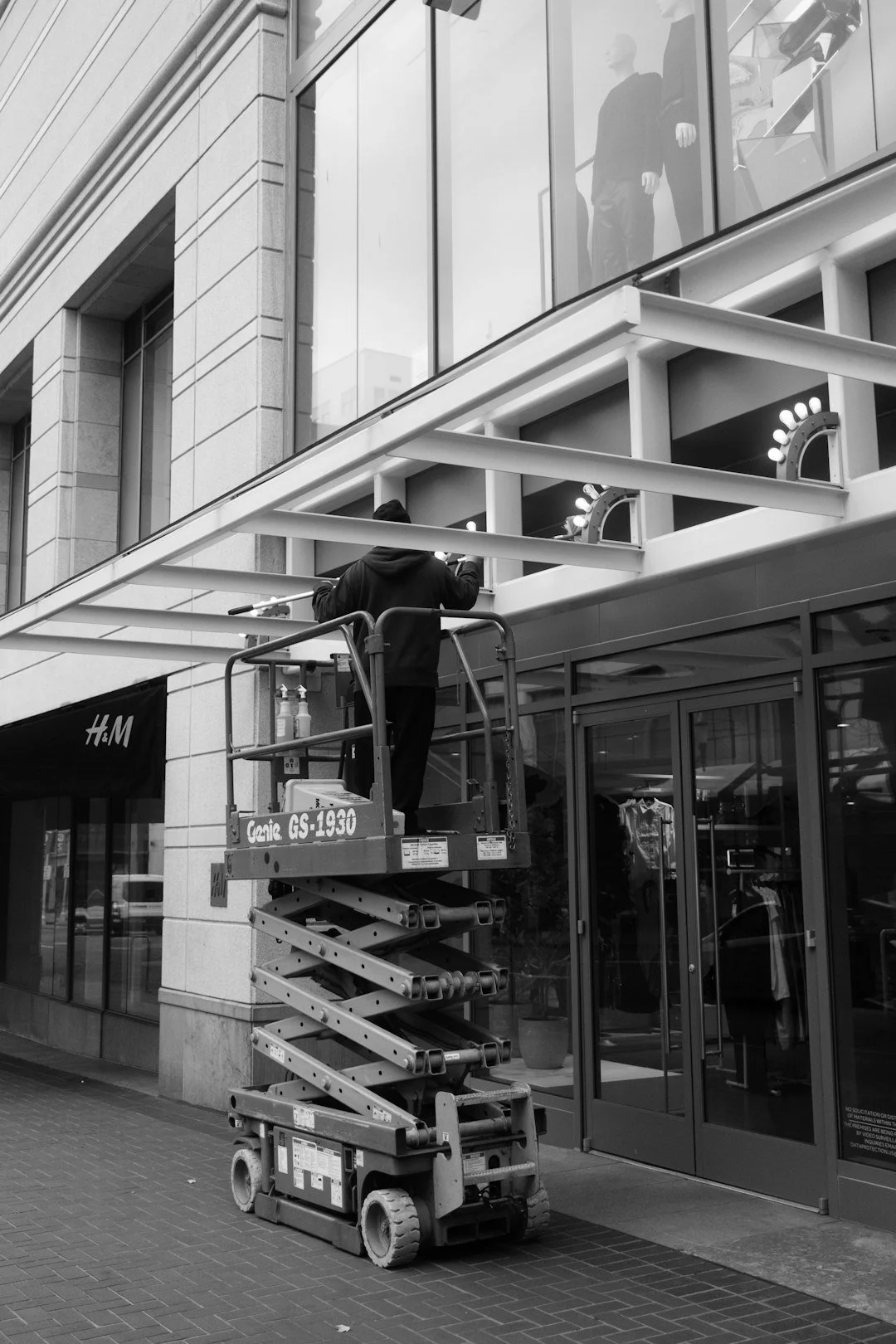
- Scissor Lifts (OSHA 1926.451(g)(1)(vii)): OSHA considers a complete, closed guardrail system adequate fall protection for scissor lifts. A harness is not federally mandated unless required by the manufacturer's operator manual or employer policy.
- The 6-Foot Lanyard Trap on Scissor Lifts: If an employer mandates personal fall protection inside a scissor lift, attaching a standard 6-foot shock-absorbing lanyard creates a severe hazard. In a fall, the lanyard length combined with tear-out deceleration allows the operator to strike the ground or chassis. When fall protection is used in lifts, operators must use fall restraint lanyards (restricting travel outside the railing) or compact Self-Retracting Lifelines (SRLs) anchored strictly to certified manufacturer anchor points—never to the handrails.
MEWP Operational Matrix: Standards, Systems & Ground Controls
| Platform Category | Governing Standard | Mandatory Fall Protection Setup |
|---|---|---|
| Boom Lifts (Telescopic & Articulating) | 29 CFR 1926.453 / ANSI A92.20 | Full-body harness + adjustable restraint lanyard or Class 1 SRL anchored strictly to designated basket eyelet. |
| Scissor Lifts (Vertical Lifts) | 29 CFR 1926.451 / ANSI A92.20 | Compliant 42" guardrails with midrails and toe-boards. If harness is company-mandated, use travel restraint only. |
| Site Safe Use Plan | ANSI/SAIA A92.22 Section 4 | Written risk assessment, site hazard survey, ground-bearing capacity check, and documented emergency rescue plan. |
| Supervisor Training | Under ANSI A92.24, anyone directly supervising MEWP operators must complete formal supervisor training on lift selection, inspection rules, and hazard controls. | |
The 4 Core Elements of an ANSI A92.22 Safe Use Plan
Since the adoption of the updated ANSI A92 standards, every company utilizing MEWPs must develop a written Safe Use Plan specific to the jobsite before wheels touch the deck:
- Risk Assessment & Hazard Identification: Detailed surveys identifying overhead power lines (minimum 10-foot clearance up to 50kV), ceiling trusses, drop-offs, floor holes, and pedestrian traffic routes.
- Ground Conditions & Bearing Pressure: Verifying that concrete slabs, unpaved gravel, or soil backfills can withstand gross vehicle weight plus maximum rated platform capacity without sinking or shifting out of level.
- Documented Rescue Plan (Ground Rescue): If the platform operator collapses due to medical shock or the basket controls fault at 40 feet, who brings the basket down? The plan must specify who on the ground is trained to operate the emergency descent valves and auxiliary ground controls.
- Site Briefing & Operator Familiarization: Confirming that all occupants understand machine-specific operating manuals, weather/wind speed limitations (maximum 28 mph on outdoor units), and daily pre-start inspections.
3 Costly MEWP Audit Findings
1. Tying Off to Non-Approved Anchorages
Lanyards must only be connected to certified anchorage points installed and labeled by the lift manufacturer inside the basket. Clipping a carabiner to the upper handrail or midrail is strictly prohibited—tubular guardrails are not engineered to withstand dynamic fall arrest shock loads and will deform under impact.
2. Climbing on Guardrails or Using Planks for Extra Height
Operators must maintain firm footing on the platform floor at all times. Standing on midrails, perching on top rails, or placing stepladders or buckets inside the basket to reach another two feet into the bar joists is an immediate willful OSHA citation.
3. Untrained Ground Personnel for Emergency Descent
If an operator experiences an arc flash, heat stroke, or sudden incapacitation while elevated, ground staff cannot spend 20 minutes searching for the instruction manual behind the battery door. Having designated, trained ground personnel who have physically tested the manual bleed-down controls is mandatory under ANSI A92.22.
Certify Your Operators & Supervisors with Southeast Safety Partners
Compliance on aerial lifts requires more than a generic driving test. It demands formal classroom theory, documented hands-on operational evaluations, machine-specific familiarization, and compliant Safe Use Plan documentation.
At Southeast Safety Partners, we deliver practical, instructor-led MEWP Operator Certification, MEWP Supervisor Training, and Train-the-Trainer instruction directly to your facility or construction site across Nashville, Murfreesboro, Smyrna, Franklin, and Lebanon. We provide turnkey operator evaluations, inspection templates, and safe work protocols to keep your team protected and audit-ready.
Ensure your aerial lift operations are fully compliant.
👉 Visit our website or call Southeast Safety Partners today to schedule certified on-site MEWP training and jobsite safety audits across Middle Tennessee.
