

BOOM LIFT OPERATOR TRAINING IN GREATER NASHVILLE & MIDDLE TENNESSEE
OSHA 29 CFR 1926.453 & ANSI A92 On-Site Telescopic & Articulating Boom Certification
Operating a boom lift places workers at significant elevations while managing extreme cantilever dynamics, machine tipping points, and overhead clearances. Passive computer modules and click-through slides cannot teach an operator how to feather a proportional joystick, manage boom whip, or react to ground settling under heavy outriggers.
At Southeast Safety Partners, we eliminate digital fatigue by conducting hands-on, jobsite-specific training on your active property. We train operators to master ANSI Group B, Type 3 Mobile Elevating Work Platforms (MEWPs)—including articulating knuckles and straight telescopic booms—ensuring 100% compliance with OSHA 29 CFR 1926.453, 1910.67, and updated ANSI/SAIA A92 standards.
Boom Lift Operator Certification Curriculum
Our curriculum satisfies both initial operator licensing and mandatory 3-year renewal evaluations. We emphasize the high-risk mechanical factors unique to boom platforms:
Machine Stability & Dynamic Load Charts
Understanding rated platform capacities, horizontal outreach restrictions, boom extension angles, counterweight tailswing clearance, and dynamic centers of gravity when driving over uneven terrain or compound slopes.
Mandatory Fall Arrest & Lanyard Attachment
Unlike scissor lifts, federal OSHA standards strictly require full-body harnesses with energy-absorbing or self-retracting lanyards on all boom platforms. We verify harness inspections, proper lanyard anchor attachment points, and fall clearance calculations.
The "Catapult Effect" & Hazard Avoidance
Training operators to anticipate the whiplash effect magnified at high elevations when wheels encounter potholes, curbs, or soft soil. We teach defensive boom positioning to avoid overhead structural pinch points and maintain Minimum Approach Distances (MAD) from energized power lines.
Hands-On Driving & Elevation Evaluation
Live practical flight tests on your equipment. Operators demonstrate turret rotation, telescope extension, platform leveling, auxiliary descent system verification, and precision maneuvering around facility structures.
Boom Lift Equipment We Train & Evaluate
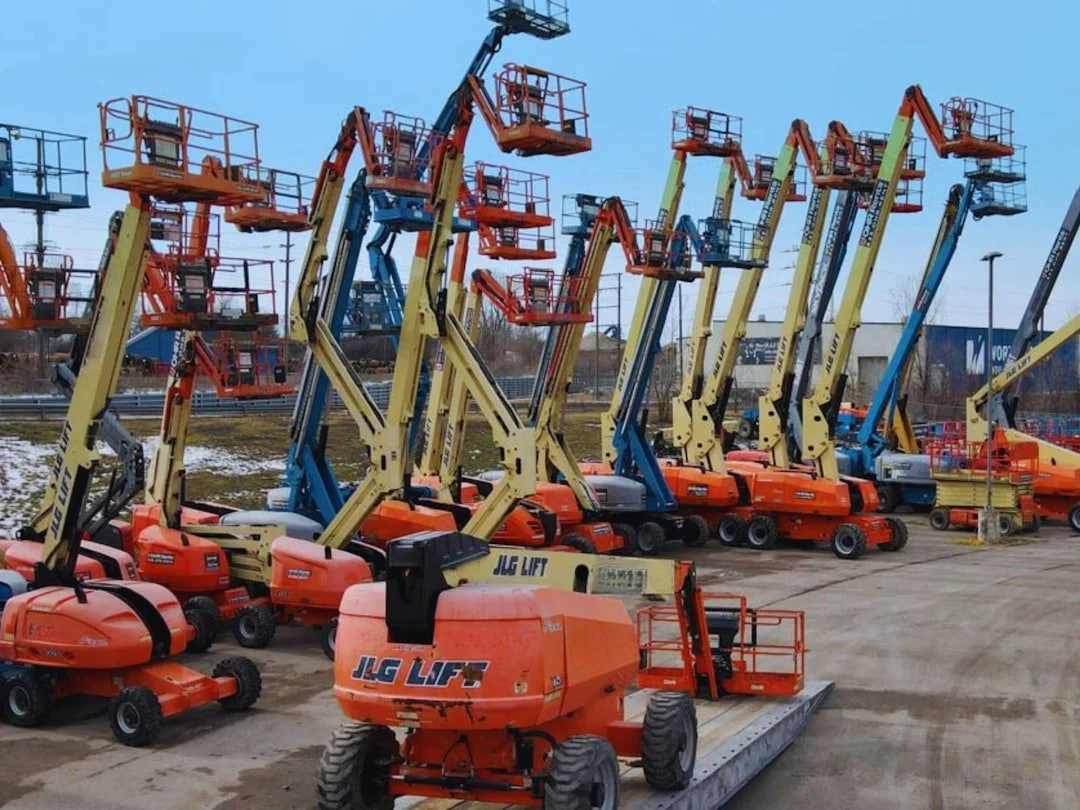
We tailor evaluations directly to the boom lift classifications and fuel sources your facility operates:
Articulating Boom Lifts
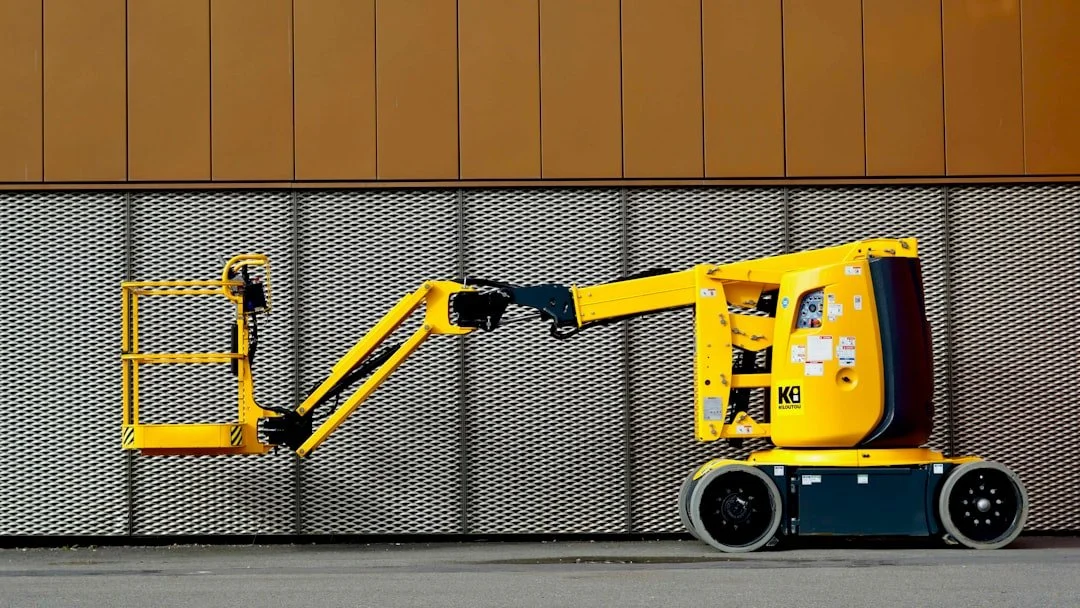
"Knuckle booms" engineered with multiple hinged sections, allowing platforms to reach up, over, and around piping, structural steel, and facility obstacles.
- Jib rotation and platform positioning
- Multiple hinge point coordination
- Chassis tailswing awareness
Telescopic "Stick" Booms
Straight booms built for extended horizontal outreach and extreme elevation on civil construction, exterior painting, and structural steel jobs.
- Horizontal outreach load chart limits
- Rough terrain 4WD / axle extension
- High-elevation wind rating limits
Towable & Electric Booms
Trailer-mounted and compact electric slab boom lifts used for interior industrial maintenance, facility lighting, and zero-emissions environments.
- Hydraulic outrigger pad stabilization
- Battery charging ventilation & upkeep
- Narrow aisle indoor clearance
In-House Boom Lift Train-the-Trainer Certification
Authorize Your In-House Personnel to Conduct Certifications Internally
For commercial contractors and industrial operations managing steady onboarding or multi-shift projects, sending crew members to outside classes creates costly operational delays. Our Boom Lift & MEWP Train-the-Trainer Course equips your designated safety directors, superintendents, and foremen to oversee classroom instruction, evaluate driving proficiency, and issue valid in-house credentials.
- Standardized Evaluation Toolkits: Practical driving evaluation forms, pre-shift mechanical checklists, and complete ANSI A92 curriculum materials ready to use.
- Legal Competency Standards: Understand how to document operator authorizations, assess site-specific job hazards, and conduct annual program reviews that hold up under OSHA or general contractor scrutiny.
- Multi-Equipment Mastery: Gain the authorization to evaluate telescopic booms, articulating knuckles, scissor lifts, and vertical mast personnel lifts under a single corporate program.
ANSI/SAIA A92 Safe Use & Rescue Planning
Modern aerial standards demand comprehensive administrative controls alongside operator cards. We ensure your facility complies with all updated ANSI A92 requirements:
Site-Specific Safe Use Plans (SUP)
We help safety managers draft written Safe Use Plans covering ground condition surveys, subsurface utilities, slope limits, and traffic control perimeters.
Written Emergency Rescue Plans
OSHA requires documented rescue protocols to safely retrieve an operator in the event of platform control failure, electrical contact, or medical emergency at elevation.
Ground Controller Familiarization
Training dedicated ground personnel on the location and proper operation of auxiliary chassis controls to lower elevated personnel safely during emergencies.
Supervisor & Foreman Compliance
Training site managers on the specific aerial oversight rules required under ANSI A92.22, including identifying improper harness use and unsafe ground positioning.
On-Site Training Delivered Across Middle Tennessee
Federal OSHA standards mandate that hands-on equipment evaluations take place in the operator's actual work environment. Our mobile instructors travel directly to your jobsite, yard, or facility in Nashville, Murfreesboro, Smyrna, Franklin, Lebanon, and Mt. Juliet. We train your personnel on the exact machines they drive every shift—saving time, eliminating travel expenses, and maintaining compliance.
Ready to Certify Your Boom Lift Operators?
Eliminate cut-rate click-through courses and protect your workforce with certified, hands-on boom lift training. Contact Southeast Safety Partners today to schedule on-site evaluations or group classes.